
Knossos Palace FAQs 2026 — Tickets, Hours & Visiting Tips
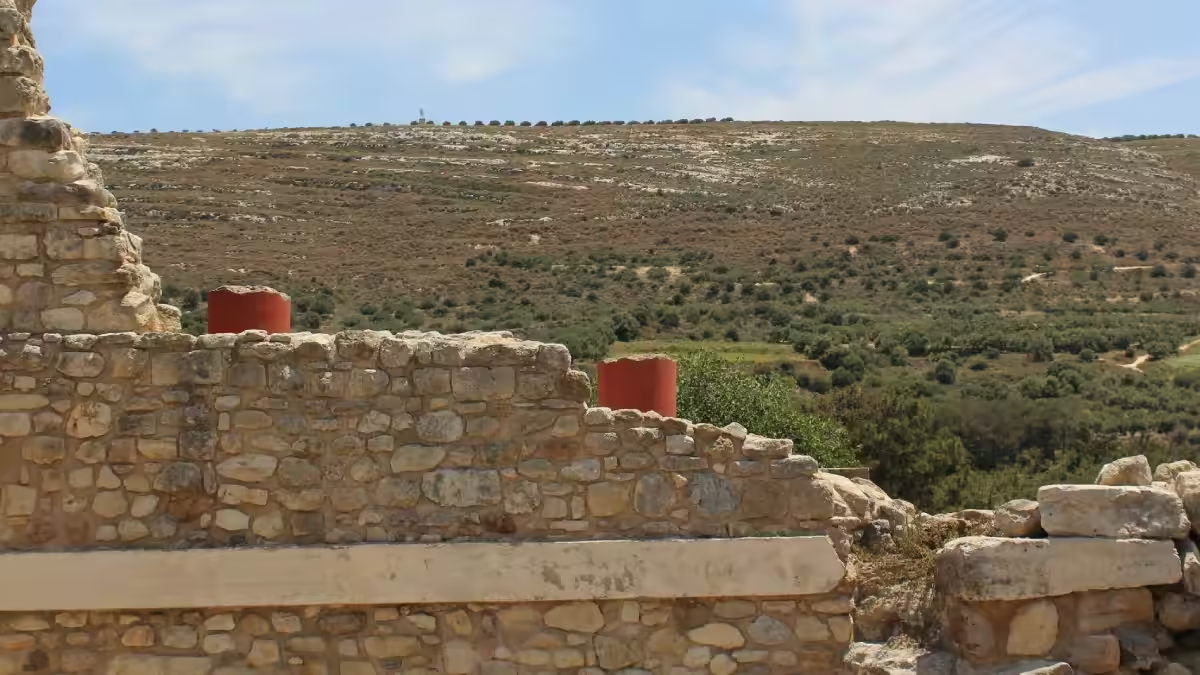
The Palace of Knossos sits about 5 km south of Heraklion and is Crete’s largest Minoan site, roughly 4,000 years old. Adult entry is €20 year-round, it opens daily from 8:00 AM, and you should allow 1.5 to 2 hours. City bus #2 gets you there in about 20 minutes. This page answers the questions visitors ask most before they go.
Knossos raises a lot of practical questions — what a ticket costs now, when to arrive, how to get there, whether the famous frescoes are real, and how the site connects to the myth of the Minotaur. The answers have shifted recently, most notably a Greek ticketing reform that raised prices and removed the old winter discount.
This page pulls together the most common questions in one place, grouped by topic, so you can plan a smooth visit. Each answer links to a fuller guide where you’ll find the detail.
Before You Go: The Essentials
Most first-time confusion comes down to three things: the ticket, the timing, and expectations of what you’ll actually see. The ticket is now a flat €20 whatever the season. The timing rewards an early start, since the ruins are exposed and get crowded from mid-morning. And the reconstruction can surprise people — much of what stands is Sir Arthur Evans’s concrete rebuilding from 1900, and the wall paintings are reproductions. Our guide to whether Knossos is worth visiting tackles that debate head-on.
How much is a ticket to Knossos in 2026?
The standard adult ticket is €20, charged year-round after a recent Greek ticketing reform that raised the price and scrapped the old cheaper winter rate. The reduced ticket is around €8 to €10 for eligible visitors. Prices can change, so confirm the current figure on the official portal before you go. Our tickets and prices guide breaks down every category.
Where should I buy Knossos tickets?
You can buy at the gate or online through the official Hellenic Heritage portal at the €20 rate. Resellers and tour platforms sell timed-entry tickets too, usually with a small margin that covers an English checkout, an audio guide or a booked slot. Booking ahead is sensible in peak summer, when the ticket booth is busiest. Off-season you can usually walk up without much of a queue.
Is there a combined Knossos and Heraklion museum ticket?
The old official combined ticket covering both Knossos and the Heraklion Archaeological Museum was discontinued in the recent reform, so you generally buy each separately now. Some tour operators still bundle the two into a single package. Since the original frescoes live in the museum, many visitors do both anyway. Our guide to combined tickets explains the current situation.
Can I visit Knossos for free?
Yes, for some. All under-18s enter free, as do EU citizens aged under 25 with valid ID. Entry is also free on the first and third Sundays of each month from November through March, plus several national free-admission days across the year. Free days are noticeably busier, so arrive right at opening. See our free entry and discounts guide for the full list.
Are skip-the-line tickets worth it?
It depends. Most “skip-the-line” reseller tickets are really timed entry, so you enter within a booked window rather than bypassing the line entirely. A guided walking tour usually does include genuine skip-the-line access alongside a licensed guide. In peak summer, when queues build at the booth, that can be worth it. Our skip-the-line guide weighs the options honestly. ### Hours & Timing
What are Knossos’s opening hours?
Knossos opens daily from 8:00 AM for most of the year, closing as late as around 8:00 PM at the height of summer and progressively earlier through autumn. Winter hours (November to March) are shorter, roughly 8:30 AM to 5:00 PM. Last entry is about 15 minutes before closing. The full seasonal breakdown is in our opening hours guide.
What’s the best time of day to visit?
Right at the 8:00 AM opening. The site is open-air with almost no shade, so early mornings are far cooler and much quieter than the mid-morning to midday stretch, when coach tours and cruise groups arrive. Late afternoon is a decent second-best window in summer. Our best time to visit guide covers the ideal windows by season.
How long do I need at Knossos?
Allow about 1.5 to 2 hours to walk the palace at a comfortable pace, taking in the Throne Room, the Grand Staircase, the Queen’s Megaron and the Central Court. Add time if you follow a full guide or pause for shade in summer heat. The site is compact but the paths are uneven and slow going. Our how long to visit guide helps you fit it into your day.
Is Knossos open all year?
Yes. Knossos has no weekly closing day and opens every day except a handful of Greek public holidays: January 1, March 25, Easter Sunday, May 1, and December 25 and 26. Hours are occasionally trimmed on some holiday eves, so if you’re visiting around a national holiday, confirm the schedule on the official portal first. ### Getting There
How do I get to Knossos from Heraklion?
The palace is about 5 km south of central Heraklion. City bus #2 runs there in roughly 20 minutes for about €1.70, departing every 15 to 20 minutes from the city center. A taxi costs around €10 to €15 one way. Many visitors combine the trip with a tour that includes transport. Our how to get to Knossos guide covers every option.
Is there parking at Knossos?
Yes. There is paid parking near the site entrance, typically around €3 to €5, along with some informal spots and cafés with parking nearby. In peak season the closest lots fill early, which is another reason to arrive at opening. If you’d rather skip the driving and parking altogether, bus #2 drops you close to the gate. ### The Site & What to See
What is the Palace of Knossos?
Knossos is the largest and most important Minoan palace on Crete, roughly 4,000 years old and often called the “first city in Europe.” It was the legendary seat of King Minos, tied to the myth of the Minotaur and the Labyrinth. Excavated from 1900 by Sir Arthur Evans, it showcases advanced Bronze Age architecture, drainage and art. Our guide to who the Minoans were sets the wider scene.
Are the frescoes at Knossos real?
No — the bright wall paintings you see on site are replicas. The griffins in the Throne Room, the Queen’s Megaron dolphins and the north-entrance charging bull are all reproductions. The surviving originals are displayed in the Heraklion Archaeological Museum in the city. This is a key reason many visitors pair the palace with the museum on the same trip.
Is Knossos connected to the Minotaur myth?
Yes — this is the legendary Labyrinth of King Minos, where the half-bull, half-man Minotaur was said to be kept. The palace’s maze-like layout of corridors and rooms is often linked to how the myth arose, and bull imagery appears throughout the site. It’s myth, not documented history, but it’s woven into the place. Our guide to the Minotaur myth and the Labyrinth explores the connection.
Do I need a guide at Knossos?
A guide or audio guide is recommended because on-site signage is limited and the reconstructed ruins can read as a confusing maze of walls without context. A licensed guide on a guided walking tour brings the layout and history to life in about 90 minutes; a self-guided audio option is a cheaper alternative. Either helps you make sense of Evans’s reconstruction and the Minoan world it represents. ### Practicalities
What should I wear and bring?
Wear closed, comfortable shoes for the uneven stone paths and worn steps, and bring water, a hat and sunscreen. The site is open-air with almost no shade and gets very hot in summer, so sun protection matters. Arriving at opening helps you beat both the heat and the crowds. Our guide on what to wear and bring has the full checklist.
Is Knossos accessible for limited mobility?
Partly. The site has uneven ground, worn steps and some level changes, which make full wheelchair access difficult, though parts of the main routes are manageable and there have been accessibility improvements. It’s worth planning ahead and pacing the visit. Our accessibility guide covers the terrain, facilities and what to expect in detail.
Is Knossos suitable for kids?
Yes, especially with a little storytelling — the Minotaur and the Labyrinth capture children’s imaginations, and the palace is compact enough for shorter attention spans. Bring water, sun protection and snacks, and keep an eye on the uneven paths and unfenced drops. An early start avoids the worst heat. Our guide to visiting Knossos with kids has family-friendly tips.
