
The Queen’s Megaron of Knossos: Dolphins & Flushing Toilet
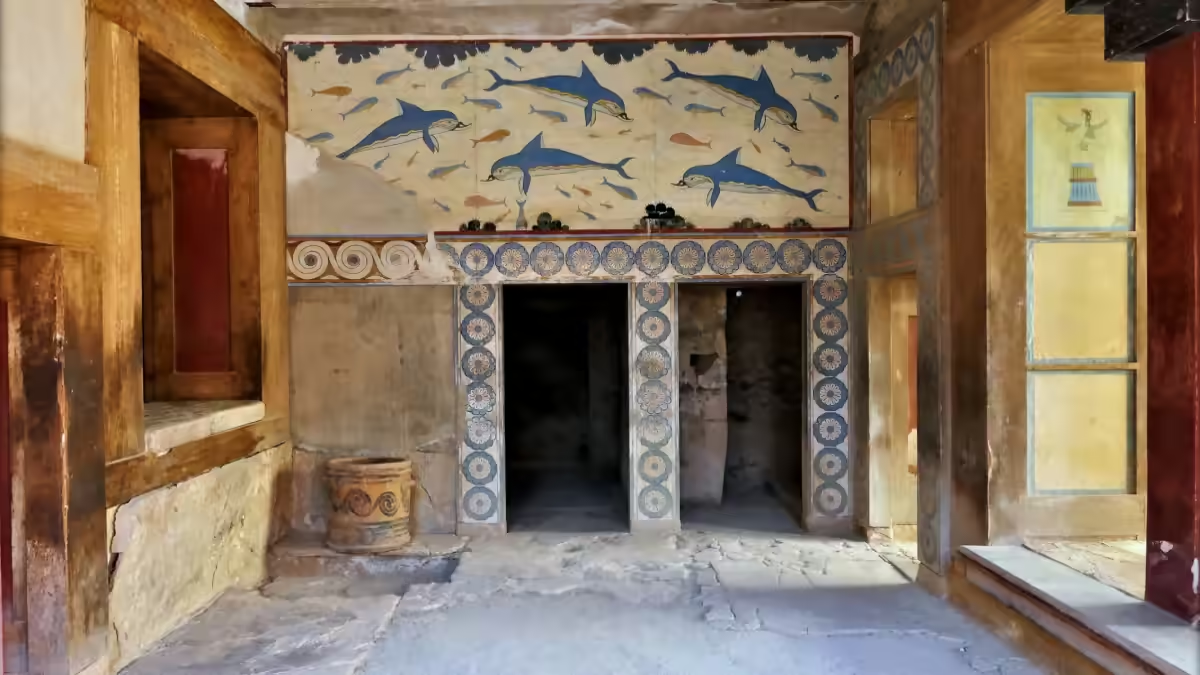
The Queen’s Megaron is the set of private apartments in the residential East Wing of Knossos, named by Sir Arthur Evans for their decoration and comfort. It is famous for the Dolphin fresco (a replica on site), for its light-wells, and for an adjoining bathroom with advanced drainage and an early flushing toilet — some of the oldest sophisticated plumbing in the world, around 3,500 years old.
Tucked into the residential quarter of Knossos is a suite of rooms that does more than any other to make the Minoans feel human. Evans named it the Queen’s Megaron, and while we cannot know who lived here, the apartments show a level of domestic comfort — running water, drainage, a private bathroom, decorated walls — that is startling for the Bronze Age.
This guide walks you through the Queen’s apartments: the Dolphin fresco and what it tells us, the light-wells that lit and cooled the rooms, the remarkable drainage system and early flushing toilet, and what all of it reveals about daily Minoan life.
The Queen’s Megaron at a Glance
| Detail | Queen’s Megaron |
|---|---|
| Location | Residential East Wing, below the Grand Staircase |
| Named by | Arthur Evans |
| Signature fresco | Dolphins (replica on site) |
| Comfort features | Light-wells, private bathroom |
| Plumbing | Terracotta pipes, drainage, early flushing toilet |
The Queen’s Apartments
The Megaron is a suite rather than a single room: a main hall opening onto small courts and light-wells, with a bathroom and connecting corridors alongside. It sits low in the East Wing, reached from the Grand Staircase that linked the residential floors, and its scale is domestic and intimate rather than monumental. Partition walls and column bases mark out spaces designed for living, not for ceremony.
Evans’s “Queen” is a label, not a documented person. He imagined a royal household on the model of a palace, but the apartments may equally have belonged to elite residents or served a range of household functions. What is not in doubt is that these were high-status private rooms, finished and equipped to a standard that says a great deal about how the Minoan elite lived.
The Dolphin Fresco
The Dolphin fresco shows blue-and-yellow dolphins swimming among smaller fish against a light background, evoking the sea that surrounded Minoan Crete. The version on the wall of the Queen’s Megaron is a reproduction; the original fragments are in the Heraklion Archaeological Museum. Its playful marine theme fits the room’s domestic, private character rather than the solemn imagery of the ceremonial west wing.
The dolphins are the emblem of the Queen’s Megaron: sleek marine creatures arcing across the wall, surrounded by little darting fish, all in the fresh blues and golds the Minoans loved. As a seafaring, trading people, the Minoans filled their art with the sea, and a lighthearted underwater scene suits a private living space far better than the guardian griffins of the Throne Room.
Scholars still debate exactly how the fragments were arranged — whether the dolphins ran as a frieze on the wall or belonged to a floor — but the reconstruction has become iconic either way. As everywhere on site, remember it is a replica: the surviving original, along with the palace’s other Minoan frescoes, is displayed in the city museum, so seeing both gives you the full work.
Light-Wells and the Cretan Climate
Like the rest of the residential quarter, the Queen’s Megaron is built around light-wells — small open shafts that bring daylight and air into interior rooms. Here their purpose is comfort: they kept the apartments naturally lit and ventilated through the fierce Cretan summer, and let the household open the space to a courtyard or close it off as the weather demanded.
The effect was a flexible, livable set of rooms that stayed cool and bright without direct sun beating in. It is one more sign that Minoan builders thought hard about how daily life actually felt inside their walls, an ingenuity that also runs through the wider story of who the Minoans were.
Advanced Drainage and an Early Flushing Toilet
Off the Queen’s Megaron lay a private bathroom with a terracotta bathtub and, nearby, a latrine connected to the palace’s drainage system. Water could be poured or channeled to flush waste into stone-lined drains beneath the floors — an early flushing toilet dating to roughly the 15th century BC. Knossos had jointed clay pipes and a gravity-fed sewer network far ahead of anything else in Bronze Age Europe.
This is the detail that stops visitors in their tracks. Adjoining the apartments was a small bathroom, and beside it a latrine set over a channel that fed into the palace’s drains. Water carried from a cistern or poured by hand could sluice waste away through stone-lined conduits — in effect a flush, some 3,500 years ago. It is frequently cited as one of the earliest flushing toilets known.
The toilet was only one node in a remarkable network. Knossos used tapered, jointed terracotta pipes — shaped so water sped up and flushed out sediment — along with separate systems for fresh water, wastewater and storm runoff, all running by gravity beneath the floors. This plumbing is genuine Minoan engineering, not part of the concrete added during the reconstruction by Arthur Evans, and it is one of the strongest arguments for how advanced the civilization was.
Daily Minoan Life
Put the pieces together and the Queen’s Megaron becomes a window into everyday Minoan life: decorated rooms lit by light-wells, a private bathroom with running water and drainage, sea imagery on the walls, all inside a comfortable multi-story home. It is a far cry from the mythic image of the Labyrinth and the Minotaur — instead, a picture of real people living well.
That human scale makes this one of the most engaging parts of the site for families, since the dolphins and the ancient toilet make abstract archaeology tangible; our guide to visiting Knossos with kids suggests how to keep younger visitors interested. To find the Megaron and pair it sensibly with the Grand Staircase and the residential quarter, use the Knossos site map to plan your route.
Frequently Asked Questions
What is the Queen’s Megaron at Knossos?
It is a suite of private apartments in the residential East Wing, named by Arthur Evans. The rooms include a main hall, light-wells and a bathroom, and are decorated with the famous Dolphin fresco. Comfortable, well-lit and equipped with running water and drainage, they show how the Minoan elite lived and are among the most human-feeling spaces on the whole site.
Is the Dolphin fresco original?
No. The dolphins on the wall of the Queen’s Megaron are a reproduction. The surviving original fragments are held in the Heraklion Archaeological Museum along with the palace’s other wall paintings. The marine scene, all blue and gold dolphins among smaller fish, reflects the Minoans’ seafaring culture and suits the room’s private, domestic character.
Did Knossos really have a flushing toilet?
Yes, in an early form. A latrine beside the Queen’s bathroom connected to the palace’s drainage system, and water poured or channeled through it flushed waste into stone-lined drains — a flush dating to around the 15th century BC. It is often described as one of the world’s earliest flushing toilets and is a genuine Minoan feature, not part of Evans’s reconstruction.
How advanced was the plumbing at Knossos?
Remarkably. The palace had tapered, jointed terracotta pipes that sped up water flow to flush out sediment, plus separate gravity-fed systems for fresh water, wastewater and storm runoff running beneath the floors. This level of sanitary engineering was far ahead of anything else in Bronze Age Europe and is one of the clearest signs of how sophisticated Minoan civilization was.
Who actually lived in the Queen’s Megaron?
We do not know. “Queen’s Megaron” is Evans’s romantic label, based on the apartments’ comfort and decoration rather than any inscription. The rooms may have housed a royal woman, other elite residents, or served broader household functions. Treat the name as a nickname, and focus instead on what the rooms clearly show: high-status, comfortable private living.
What are the light-wells for?
Light-wells are small open shafts that bring daylight and fresh air into interior rooms. In the Queen’s Megaron they kept the apartments lit and ventilated through the hot Cretan summer, and let the household open up or close off the space as needed. They appear throughout the residential quarter and are a signature of comfortable Minoan domestic design.
Where is the Queen’s Megaron in the palace?
It sits in the residential East Wing, reached by descending from the Grand Staircase that linked the wing’s several floors. The area steps down the hillside toward the valley, so expect changes of level. Use the site map to plan a route that takes in the Megaron, the staircase and the Central Court without doubling back.
Is a guide worth it for the residential quarter?
Yes. The apartments, drains and light-wells are easy to walk past without realizing what you are seeing, and on-site signage is limited. A guided walking tour points out the Dolphin fresco, the bathroom and the plumbing and explains how the household actually lived, which brings the ruins to life far more than a rope and a wall would.
