
The Charging Bull Fresco & North Entrance at Knossos
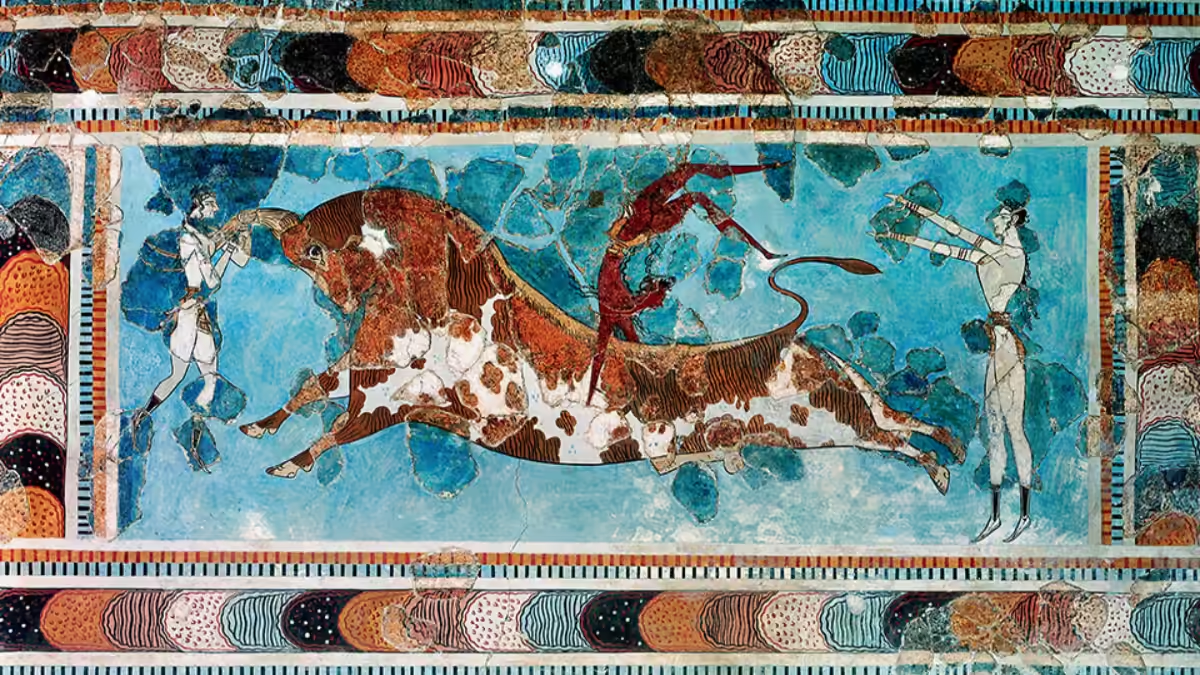
The North Entrance is the dramatic ramped passage that led into the Palace of Knossos from the harbor side, and above it sits the restored Charging Bull relief fresco — a raised, sculpted painting of a bull in mid-charge. The version on site is a replica; the surviving original fragments are in the Heraklion Archaeological Museum. The bull dominated Minoan religion and art, which is why it guards this ceremonial gateway.
Most visitors first meet the Charging Bull as they walk up the North Entrance ramp, when the reconstructed relief of a huge bull suddenly looms over the passage. It is one of the most photographed sights at Knossos and a fitting introduction to a culture obsessed with the animal. The setting — a steep, columned passage climbing into the palace — was clearly designed to impress arrivals.
This guide covers the North Entrance passage and its pillared hall, the Charging Bull relief fresco above it, the fact that the version you see is a replica, and why the bull carried such weight in Minoan life.
The North Entrance at a Glance
| Detail | North Entrance & Charging Bull |
|---|---|
| Location | North side of the palace, toward the harbor |
| Form | Ramped passage rising into the Central Court |
| Flanking hall | Colonnaded “Pillar Hall” (Customs House) |
| The relief | Charging Bull, painted plaster relief |
| On site | Replica (Evans-era restoration) |
| Original | Heraklion Archaeological Museum |
The North Entrance Passage
The North Entrance is a sloping, paved corridor that climbed from the northern approach up into the palace and its Central Court. It narrows as it rises and was flanked by raised colonnaded bastions, so anyone entering was funneled upward beneath imposing walls. This was the ceremonial approach from the direction of the sea, and its design was meant to make arrival at the palace feel like an event.
The North Entrance was one of the main formal approaches to Knossos, coming from the north — the direction of the coast and the palace’s harbor links. Rather than a simple doorway, it is a ramped passage that rises steadily toward the heart of the complex, narrowing as it climbs so that the walls press in on either side. The effect, then as now, is theatrical: you are drawn upward and forward.
At the top, the passage delivers you into the great central space of the palace. That space is the subject of our guide to the Central Court, and the North Entrance is the most atmospheric way to reach it. On the way up you pass the reconstructed bastions that once framed the corridor, part of the extensive concrete restoration carried out during the excavation.
The Pillared Hall
Set beside the lower end of the North Entrance is a broad colonnaded hall, sometimes called the Pillar Hall or, more speculatively, the “Customs House.” Its rows of columns once supported an upper floor, and the space would have been a shaded, semi-open area controlling movement between the northern approach and the palace interior.
Exactly what happened here is uncertain. The “customs house” name reflects an old idea that goods arriving from the harbor were checked at this point, but that is interpretation rather than fact. What you can see clearly is the scale of the columned hall and how it worked with the ramp to manage the flow of people into the palace. As with much of the site, the reconstructed columns and upper level are the work of Sir Arthur Evans, whose methods are discussed in our guide to his reconstruction of Knossos.
The Charging Bull Relief Fresco
The Charging Bull is a painted plaster relief — a raised, sculpted image rather than a flat painting — that was mounted on the bastion wall above the North Entrance. It shows a large bull in motion, and it is one of the few relief frescoes known from the Minoan world. The version on the wall today is a reproduction; only fragments of the original survived, and those are conserved in the Heraklion museum.
The Charging Bull is what everyone remembers from the North Entrance. Unlike the flat wall paintings elsewhere in the palace, this is a relief fresco: the plaster was modeled into raised forms and then painted, so the bull’s body appears to surge out of the wall. Placed high on the bastion above the ramp, it would have confronted every visitor climbing the passage.
The relief is one of the Minoan frescoes that make Knossos famous, and like the others it is a restoration. Only scattered fragments of the original plaster were recovered; the complete, vivid bull you photograph today was reconstructed around them, with the genuine pieces removed for safekeeping. That pattern — reproductions in place, originals in the museum — holds across the whole site, which is the single best reason to pair your visit with the Heraklion Archaeological Museum.
Why the Bull Mattered to the Minoans
The bull was not a random decorative choice. It runs through Minoan religion, art and ritual, from the sacred “horns of consecration” that topped palace walls to the drinking vessels shaped like bulls’ heads and the bull-leaping scenes painted throughout Knossos. Placing a charging bull over the main northern gateway made a statement about the palace and its power.
This deep bull symbolism also fed the later Greek myth of the Minotaur and the Labyrinth — the half-bull creature said to live in a maze beneath King Minos’s palace. For the Bronze Age society that actually built and used these spaces, and its wider beliefs, our guide to who the Minoans were gives the fuller picture. The bull you meet at the North Entrance is your first hint of just how central the animal was.
Frequently Asked Questions
What is the Charging Bull fresco at Knossos?
It is a restored relief fresco of a bull in mid-charge, mounted on the bastion wall above the North Entrance ramp. Unlike a flat painting, it is modeled in raised plaster and then colored, so the bull seems to push out of the wall. It is one of the most recognizable images at Knossos and greets visitors climbing the northern passage into the palace.
Is the Charging Bull on site the original?
No. The relief you see is a reproduction. Only fragments of the original plaster survived excavation, and those genuine pieces are conserved in the Heraklion Archaeological Museum in the city. The full bull on the wall was reconstructed around what remained. Seeing the replica in place and then the original fragments in the museum is why many visitors do both in one trip.
Where is the North Entrance at Knossos?
It is on the north side of the palace, facing the direction of the coast and the site’s old harbor links. The entrance takes the form of a ramped passage that climbs up into the Central Court, flanked by reconstructed bastions and, at its lower end, a colonnaded pillared hall. It is one of the main formal approaches to the palace and a natural early stop on a visit.
What is the Pillar Hall or Customs House?
It is a broad colonnaded hall beside the lower North Entrance, its rows of columns once carrying an upper floor. The “Customs House” name comes from an old theory that harbor goods were inspected here, but this is interpretation, not established fact. What is clear is that the hall and the ramp together controlled how people moved from the northern approach into the palace.
Why are there so many bulls at Knossos?
The bull was central to Minoan religion and identity. It appears as sacred “horns of consecration” on walls, as bull-shaped ritual vessels, and in the bull-leaping scenes painted across the palace. Positioning a charging bull over the main northern gate projected power and sanctity. This same bull symbolism later shaped the Greek legend of the Minotaur housed in the Labyrinth beneath the palace.
What is a relief fresco?
A relief fresco combines sculpture and painting: the artist builds up the plaster into raised, three-dimensional forms and then paints them, rather than painting on a flat surface. The Charging Bull is a rare Minoan example. The technique gives the bull real presence, since its head and body project from the wall, catching light and shadow in a way a flat fresco cannot.
How does the North Entrance connect to the rest of the palace?
The ramp climbs directly into the Central Court, the open rectangle at the heart of Knossos from which every wing radiates. So the North Entrance is one of the clearest ways to understand the palace layout: you rise through a controlled, dramatic passage and emerge into the central space, with the ceremonial and residential wings arranged around you.
Do I need a guide to understand the North Entrance?
Not strictly, but context helps, because the site’s signage is limited and the reconstructed bastions can be confusing without explanation. A licensed guide or an audio guide will point out the relief, explain the bull’s meaning and clarify what is original versus restored. Reading ahead and carrying a site map also works well if you prefer to explore the passage independently.
