
Is Visiting Knossos Worth It in 2026? An Honest Review
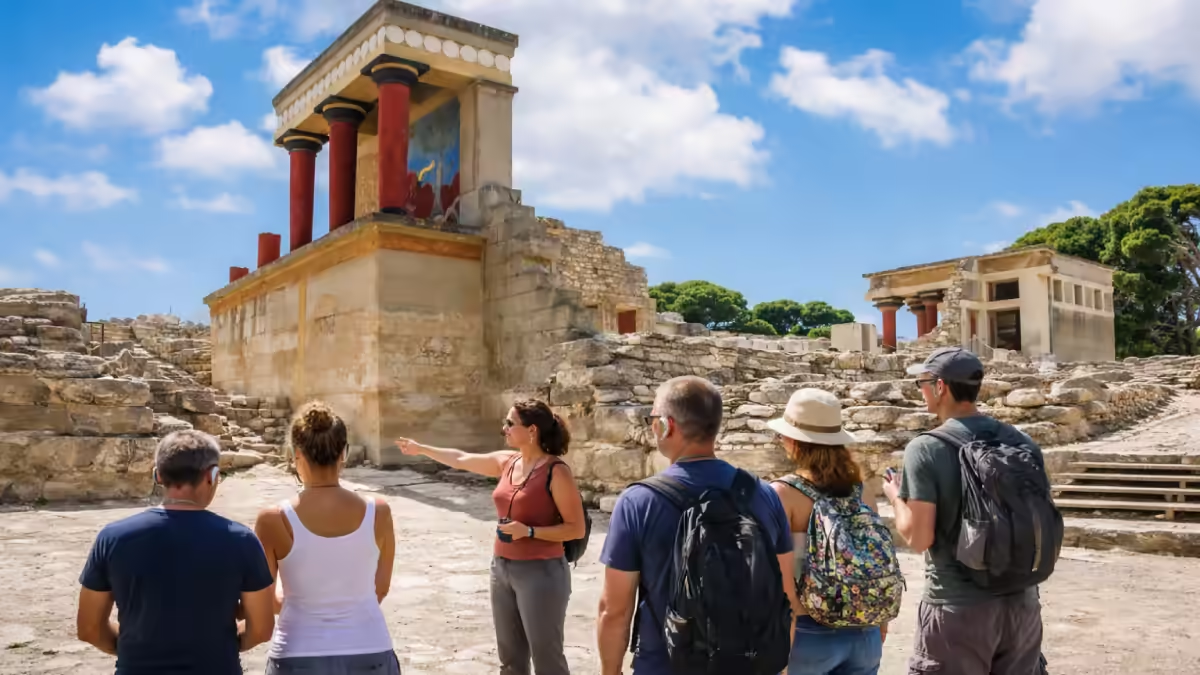
For most visitors, Knossos is worth it: it’s Europe’s oldest and largest Minoan palace, roughly 4,000 years old, and the Minoan story it tells is genuinely remarkable. The honest caveats are real, though — Arthur Evans’s concrete reconstruction divides opinion, the frescoes on site are replicas, and it gets hot and crowded. Arrive at opening, and pair it with the Heraklion museum for the full picture.
Knossos is the most visited site on Crete, and one of its most debated. Ask ten travelers and you’ll hear anything from “the highlight of the trip” to “an overrated pile of concrete.” Both camps have a point, which is why a straight, honest verdict beats hype.
This review lays out what genuinely impresses, what’s overstated, who will love Knossos, and who might reasonably skip it — so you can decide before you go.
The Honest Verdict at a Glance
| The case for | The case against |
|---|---|
| Europe’s oldest palace, ~4,000 years old | Frescoes on site are replicas |
| Remarkable Minoan story and advanced engineering | Evans’s concrete reconstruction is controversial |
| Compact, easy day trip from Heraklion | Hot, shadeless, and crowded by mid-morning |
| The Minotaur and Labyrinth legend | Limited signage without a guide |
Is Knossos Worth Visiting? The Honest Verdict
Yes, for most people Knossos is worth visiting. As Europe’s oldest palace and the center of the Minoan civilization, it offers a tangible link to a 4,000-year-old world that shaped the myth of the Minotaur. The reconstruction and replica frescoes attract fair criticism, but with a guide, an early start, and a follow-up museum visit, the great majority of visitors leave glad they went.
Start with what’s not in doubt: Knossos is old, important, and unique. This was the largest palace of the Minoans, Europe’s first advanced civilization, built around a ceremonial court with sophisticated drainage, light-wells, and multi-story architecture extraordinary for the Bronze Age. Standing in the Central Court and grasping that people lived and worshiped here 4,000 years ago is a genuine thrill for anyone with an interest in history.
The legend adds to it. This is the palace tied to King Minos, the Minotaur, and the Labyrinth, and walking its warren of rooms, you can feel where the maze myth came from. For most visitors, that combination of deep history and living legend is more than enough to justify the trip. The criticisms below are worth knowing, but they rarely outweigh the payoff.
What Divides Opinion: Evans’s Reconstruction
The biggest source of debate is the reconstruction itself. From 1900, Sir Arthur Evans rebuilt large parts of the palace in reinforced concrete — walls, tapering red columns, and whole upper floors — to show how he believed it once looked. Critics argue this is imaginative and in places speculative, blurring the line between authentic ruin and 20th-century invention. Defenders counter that it protects fragile remains and helps ordinary visitors picture a palace rather than a foundation plan.
Both views are legitimate, and how you feel about it shapes your visit. If you come expecting untouched ancient stone, the concrete will disappoint you. If you understand going in that you’re seeing one archaeologist’s vivid interpretation, it becomes fascinating in its own right. Our deeper look at Arthur Evans’s reconstruction explains what’s original, what’s rebuilt, and why it still stirs argument.
The Frescoes Are Replicas (and Why That Matters)
The bright, famous wall paintings you photograph on site — the Throne Room griffins, the Queen’s Megaron dolphins, the North Entrance charging bull — are all replicas. The surviving originals are in the Heraklion Archaeological Museum in the city. This surprises visitors who assume they’re seeing the real thing, and it’s a fair mark against Knossos taken alone.
The practical takeaway is that Knossos and the museum are two halves of one story, not competing options. See the reconstructions in place, then see the real fragments in the museum’s galleries. Because the old official combined ticket was discontinued in a recent reform, you generally buy each separately now — our guide to combined tickets covers how to see both.
The Real Downsides: Heat, Crowds, and Signage
Beyond the academic debates, three practical drawbacks affect everyone. The site is open-air with almost no shade, so summer midday is hot and tiring on uneven, reflective stone. It’s also the busiest attraction on Crete, and from mid-morning the coach and cruise groups can make the narrow walkways feel congested. And signage is limited, so without context the reconstructed rooms can read as an anonymous maze of walls.
The good news is that all three are manageable. Arrive at the 8:00 AM opening to beat both the heat and the crowds, bring water, a hat, and closed comfortable shoes, and take a guided walking tour or an audio guide to supply the missing context. Do those three things and the downsides shrink to footnotes.
Who Will Love Knossos, and Who Might Skip It
Knossos is a clear yes for anyone drawn to ancient history, mythology, or archaeology, for first-time visitors to Crete, and for families with curious kids who enjoy the Minotaur story. If you take a guide and go early, you’ll likely rate it a highlight.
You might reasonably skip it if you’re a purist who only wants authentic, unrestored ruins, if you have very limited time and no interest in the backstory, or if you’re visiting in a heatwave and can’t make an early start. Even then, most people find that the significance of Europe’s oldest palace wins out. If you’re still on the fence, weigh the visit against the practicalities in our how long to visit guide.
Frequently Asked Questions
Is Knossos worth visiting in 2026?
Yes, for most visitors it’s worth it. Knossos is Europe’s oldest and largest Minoan palace, around 4,000 years old, and tells a remarkable story tied to the myth of the Minotaur. The honest caveats — a controversial concrete reconstruction, replica frescoes, heat, and crowds — are all manageable if you arrive at opening, take a guide, and pair the visit with the Heraklion museum.
Why do some people say Knossos is overrated?
The main complaints are that Arthur Evans rebuilt much of the palace in concrete, so it isn’t untouched ancient stone, and that the vivid frescoes on site are replicas rather than originals. Add summer heat, crowds, and limited signage, and some visitors feel let down. These are fair points, but they mostly reflect mismatched expectations; understanding the reconstruction in advance changes how you experience it.
Are the frescoes at Knossos real?
No. The frescoes displayed on site — the Throne Room griffins, the Queen’s Megaron dolphins, and the North Entrance charging bull — are all replicas. The surviving originals are in the Heraklion Archaeological Museum. This is why many people treat Knossos and the museum as two parts of the same visit rather than choosing between them.
Is Knossos or the Heraklion museum better?
They complement each other rather than compete. Knossos gives you the scale, layout, and atmosphere of a real Minoan palace, while the Heraklion Archaeological Museum holds the original frescoes and artifacts. Seeing both gives the complete picture. If you can only pick one and love objects and detail, choose the museum; if you want to stand inside history, choose Knossos.
Do I need a guide to enjoy Knossos?
You don’t strictly need one, but it makes a big difference. On-site signage is limited, so without a guide or audio tour the reconstructed rooms can look like an unexplained maze of walls. A guide supplies the Minoan history, the reconstruction debate, and the Minotaur legend, turning a walk among ruins into a story most people find far more rewarding.
Is Knossos good for kids?
Yes, especially kids who like the Minotaur and Labyrinth story, which brings the maze-like ruins to life. The site is compact and the myth gives them something to hunt for. The main cautions are the summer heat and the uneven, unfenced paths, so visit early, bring water and hats, and keep an eye on younger children near the drops and steps.
How much time and money does a Knossos visit take?
Adult entry is €20 year-round, with under-18s and EU citizens under 25 free with ID. Allow 1.5 to 2 hours self-guided, or 2.5 to 3 hours with a guide. Add a half-day if you’re also visiting the Heraklion museum. For the full breakdown of prices and options, see our Knossos tickets guide.
What’s the best way to make Knossos worth it?
Do three things: arrive at the 8:00 AM opening to beat the heat and crowds, take a guide or audio tour for context, and pair the visit with the Heraklion Archaeological Museum to see the original frescoes. Go in understanding that the reconstruction is Evans’s interpretation, not untouched ruin, and you’ll get far more out of it than visitors who arrive at noon with no context.
