
Knossos Accessibility Guide: Wheelchair & Mobility Tips
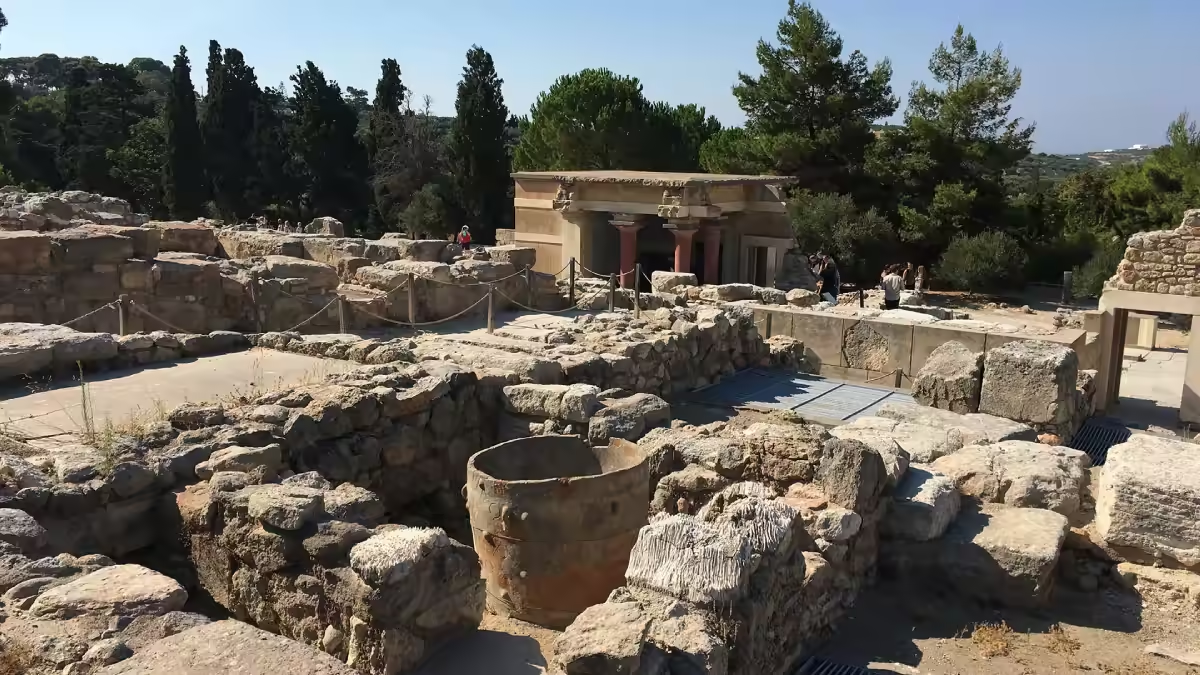
The Palace of Knossos is largely not wheelchair-accessible. It’s a 4,000-year-old open-air site with uneven ground, worn steps, gravel paths, sloping ramps and almost no shade. Some structures can be viewed from the Central Court level, but full step-free access is not possible. Visitors with limited mobility, seniors and families with strollers should plan carefully, go early, and set realistic expectations.
Knossos is an ancient palace built on a hillside and rebuilt in concrete by Sir Arthur Evans from 1900, not a modern museum, so its terrain reflects its age. Paths are uneven, several key areas involve steps or slopes, and the sun is relentless in summer. That doesn’t mean a visit is off the table for everyone with mobility needs — but it does mean being honest about what you can and can’t reach.
This guide sets out the terrain in plain terms, what’s viewable and what isn’t, and practical advice for wheelchair users, people with limited mobility, seniors and parents with young children.
Knossos Accessibility at a Glance
| Feature | Situation |
|---|---|
| Wheelchair access | Very limited; not step-free |
| Ground surface | Uneven stone, gravel, packed earth |
| Steps & slopes | Frequent, including the Grand Staircase |
| Shade | Almost none |
| Seating | Sparse; bring a plan to rest |
| Best approach | Arrive early, view from Central Court level |
Is Knossos Wheelchair-Accessible?
Not really. The Palace of Knossos has uneven stone paths, gravel stretches, sloping ramps and many steps, so it cannot be described as wheelchair-accessible in the modern sense. A powered all-terrain chair with a strong companion may manage parts of the flatter approach and the Central Court area, but much of the site — including the Grand Staircase and upper levels — is unreachable by wheelchair. Confirm current provisions with the site before visiting.
The honest picture is that Knossos was not designed for step-free access and its ancient, reconstructed structure makes retrofitting difficult. The entrance approach and portions around the Central Court are the flattest, but surfaces are loose or uneven and there are no smooth, continuous accessible routes through the palace. Manual wheelchairs will struggle on gravel and slopes. If accessibility is essential to your trip, weigh whether the Heraklion Archaeological Museum — a modern indoor building holding the original frescoes — is the more comfortable half of the story.
The Terrain: What to Expect
The ground at Knossos is a mix of worn ancient stone, packed earth, gravel and paved sections, none of it consistently level. You’ll encounter steps at several highlights, sloping ramps that echo the Minoan originals, and narrow passages between reconstructed walls. There is almost no shade anywhere on site, and seating is sparse, so a walk that takes most people 1.5 to 2 hours can be tiring for anyone with limited stamina. Sturdy, closed shoes are essential — see our guide to what to wear and bring — and going at opening avoids both the heat and the crowds that make uneven paths harder to navigate.
What You Can and Can’t Reach
From the Central Court level you can see and appreciate a good share of the palace, including views toward the Throne Room area and across the ceremonial heart of the site. What’s hard or impossible with limited mobility is the Grand Staircase down into the residential quarter, the upper reconstructed floors, and the North Entrance approach with its slopes and steps. Planning a shorter route around the flatter core is the realistic strategy.
The Central Court is the natural anchor: it’s relatively open and gives sightlines to several key structures, so visitors who can’t tackle steps still take in the scale and setting. The Grand Staircase, by contrast, descends through multiple levels and is not manageable for many with mobility limits. Rather than aiming to cover everything, plan a focused loop around the central, flatter zones and accept that some highlights are best appreciated from a distance or through our detailed site map and photos.
Advice for Seniors and Limited Mobility
For seniors or anyone who tires easily, the winning tactics are timing and pacing. Arrive at the 8:00 AM opening when it’s coolest and least crowded, carry water, and plan to rest even though formal seating is limited. A walking pole helps on the uneven surfaces if you’re steady enough to use one. A licensed guide can set a gentle pace and steer you along the easier routes while still explaining the highlights — our guide to the guided walking tour covers what that involves. Don’t over-schedule: pairing Knossos with a demanding same-day itinerary is a common mistake.
Strollers and Young Children
Strollers are difficult at Knossos. The gravel, steps and uneven stone make pushing a buggy frustrating, and you’ll often need to lift or leave it. A soft baby carrier is far more practical, freeing your hands on the uneven ground and keeping a small child secure near the drops and open edges. If you’re visiting with children, our dedicated guide to Knossos with kids has more on safety, heat and keeping the visit engaging.
Frequently Asked Questions
Is Knossos wheelchair-accessible?
Only to a very limited degree. The site has uneven stone paths, gravel, sloping ramps and many steps, and it cannot offer continuous step-free routes. A powered all-terrain wheelchair with a companion may manage the flatter approach and parts of the Central Court, but the Grand Staircase and upper levels are not reachable. If step-free access is essential, contact the site in advance and set realistic expectations.
How difficult is the terrain at Knossos?
Challenging. The ground is a mix of worn ancient stone, packed earth, gravel and paved sections, rarely level, with steps and slopes at several highlights and almost no shade. A typical visit of 1.5 to 2 hours involves a fair amount of walking on uneven surfaces. Sturdy closed shoes are essential, and an early start makes the terrain easier to handle before the heat and crowds build.
Can people with limited mobility still visit?
Yes, with planning and realistic expectations. Focus on the flatter central areas, especially around the Central Court, from which much of the palace is visible. Go at opening for cooler, quieter conditions, carry water, and pace yourself, since seating is sparse. A guide can steer you along the easier routes. Accept that some highlights, like the Grand Staircase, may be viewed from a distance rather than reached.
Are there ramps or elevators at Knossos?
There are sloping ramps that reflect the Minoan architecture, but they are not modern accessibility ramps, and there are no elevators. The site’s ancient, reconstructed structure makes standard accessible infrastructure impractical. Don’t rely on step-free routing through the palace. The flattest, most manageable ground is around the entrance approach and the Central Court level.
Can I bring a stroller to Knossos?
You can, but it’s difficult. Gravel, steps and uneven stone make pushing a stroller awkward, and you’ll frequently need to lift or park it. A soft baby carrier is far more practical and safer near the site’s open edges and drops. If you’re visiting with young children, our dedicated family guide covers the practicalities in detail.
Is there shade or seating for resting?
Very little of either. Knossos is an open-air site with almost no shade, and formal seating is sparse. In summer this makes the visit tiring, especially in the midday heat. Arrive at the 8:00 AM opening when it’s coolest, carry water, wear a hat, and plan short pauses to manage the exposed conditions.
Would the Heraklion museum be easier to access?
Generally yes. The Heraklion Archaeological Museum is a modern indoor building with level floors, and it holds the original Minoan frescoes and artifacts, so it’s a more comfortable option for visitors with mobility needs. Many people who find the Knossos terrain too demanding still get the full Minoan story there. Our guide to combined tickets explains how the two sites relate.
How long does a visit take with limited mobility?
Plan for a similar 1.5 to 2 hours, but expect a slower, more selective route rather than covering every area. Focusing on the flatter central zones and resting as needed keeps it manageable. Building in extra time removes pressure, and going at opening means cooler air and fewer crowds on the uneven paths. Don’t schedule a packed same-day itinerary around the visit.
