
Knossos Travel Tips: 15 Things to Know Before You Visit
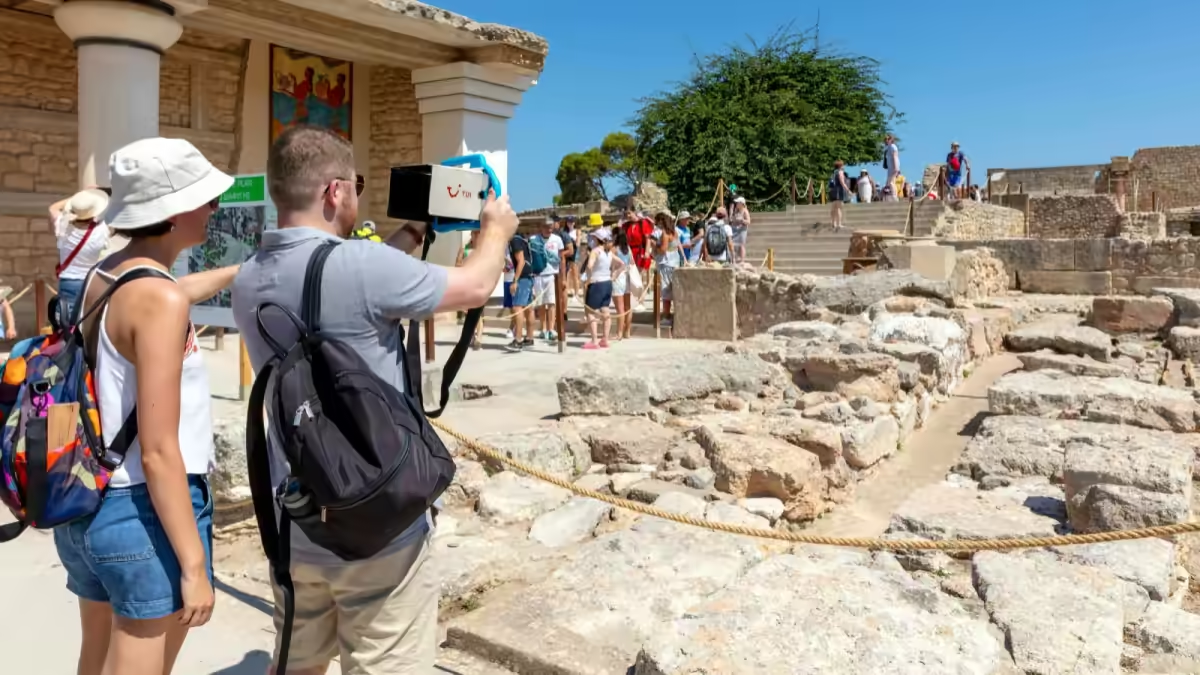
The most useful Knossos tips are simple: buy your €20 ticket ahead, arrive at the 8:00 AM opening to beat heat and coach crowds, wear closed shoes and sun protection, and carry water because the open-air site has almost no shade. Remember the on-site frescoes are replicas — the originals are in the Heraklion museum. Allow 1.5 to 2 hours, and take city bus #2 from Heraklion.
Knossos rewards a little planning more than most attractions. It’s an open-air Bronze Age palace about 5 km south of Heraklion, with uneven paths, worn steps, limited signage and very little shade — so the difference between a great visit and a hot, confusing one usually comes down to timing, footwear and knowing what you’re actually looking at.
These 15 tips gather what regular visitors wish they’d known: when to arrive, what to pack, how to get there, and how to read the reconstructed ruins once inside.
Knossos Tips at a Glance
| Tip | Why it matters |
|---|---|
| Arrive at 8:00 AM | Cooler, quieter, before coach tours |
| Buy ahead | Secures a timed slot in peak season |
| Bring water & a hat | Open-air site, almost no shade |
| Wear closed shoes | Uneven, worn stone paths |
| Allow 1.5–2 hours | Enough to see the palace properly |
| Frescoes are replicas | Originals sit in the Heraklion museum |
Before You Go: Booking & Timing
Buy your Knossos ticket before you arrive and choose an early slot. Adult entry is €20 year-round after a recent reform, and the site uses timed entry, so booking ahead secures your window and avoids the gate queue in summer. Aim for the 8:00 AM opening — the palace is far cooler and quieter before the mid-morning coach and cruise crowds arrive.
1. Buy your ticket ahead. The adult ticket is €20, charged year-round, and buying online in advance locks in your entry time and saves queueing at the booth. Our guide to Knossos ticket prices breaks down the current costs and who pays what.
2. Understand timed entry. Knossos admits visitors on timed slots rather than offering true walk-past-the-line access. Even a “skip-the-line” reseller ticket is really timed entry, as our guide on whether skip-the-line is worth it explains.
3. Arrive at opening. The single best move is to be at the gate for the 8:00 AM summer opening. Our guide to the best time to visit covers the quietest windows by season.
4. Check the closing time for your date. Summer closing runs as late as 8:00 PM, but winter (November–March) is roughly 8:30 AM to 5:00 PM, with last entry about 15 minutes before. See the full opening hours before you plan your day.
5. Consider a free-entry day carefully. Entry is free on the first and third Sundays from November to March, plus several national days — but those days are busier, so arrive right at opening.
Getting There & Around the Site
6. Take city bus #2. From central Heraklion, bus #2 runs to Knossos in about 20 minutes for roughly €1.70, every 15–20 minutes. Our guide on how to get to Knossos compares the bus, taxis and driving.
7. Budget for parking if you drive. Paid parking near the gate runs around €3–5, and it fills up by mid-morning in high season.
8. Wear closed, comfortable shoes. The paths are uneven and the ancient steps are worn and slippery, so sandals and smooth soles are a poor choice.
9. Pack for sun and heat. There is almost no shade on site, and summer midday temperatures are punishing. Bring water, a hat and sunscreen — our guide on what to wear and bring has the full checklist.
10. Allow 1.5 to 2 hours. That’s enough to walk the palace at a comfortable pace; add time for a full guide or photography. Our guide on how long to spend helps you slot it into your day.
Making Sense of the Ruins
The reconstructed walls and painted scenes at Knossos are the work of Sir Arthur Evans, who rebuilt parts of the palace in concrete from 1900. The vivid frescoes on site are replicas; the originals are displayed in the Heraklion Archaeological Museum. Because signage is limited, a guide or audio guide makes the layout far easier to follow, and pairing the palace with the museum gives the fullest picture.
11. Know the frescoes are replicas. The griffins in the Throne Room, the dolphins in the Queen’s Megaron and the charging bull at the north entrance are all reproductions — the real fragments are in the city museum.
12. Pair Knossos with the Heraklion museum. Seeing the reconstructions on site and the originals in the museum completes the story; our guide to combined visits and tickets explains the current situation since the old combined ticket was discontinued.
13. Consider a guide. Signage is sparse and the concrete reconstruction can read as a maze, so a licensed guide adds real context. Compare options in our guided walking tour guide, or book a skip-the-line guided walking tour directly.
14. Manage your expectations about the reconstruction. Evans’s rebuilt columns and upper floors are controversial — imaginative to critics, protective and illustrative to defenders. Knowing that in advance makes the site more interesting, not less.
15. Go early and go slow. Combine the tips: an early arrival, water in hand and a sense of the layout turns a hot scramble into a genuinely rewarding morning at Europe’s oldest palace.
Frequently Asked Questions
What is the single most important Knossos tip?
Arrive at the 8:00 AM opening. The site is open-air with almost no shade, and coach tours and cruise groups pour in from mid-morning. An early start means cooler temperatures, thinner crowds and better photos. Pair it with a pre-booked ticket so you walk straight to your timed slot rather than queueing at the booth in the sun.
Do I need to buy Knossos tickets in advance?
It’s strongly recommended in peak season. Knossos uses timed entry, and slots for popular morning windows can sell out or mean a wait at the gate. Booking ahead locks in your time and saves queueing. Off-season you can usually buy at the booth without much delay, but advance booking still guarantees your preferred entry window.
Are the frescoes at Knossos real?
No — the colorful frescoes on site are replicas. The surviving originals, including the Throne Room griffins and the Queen’s Megaron dolphins, are displayed in the Heraklion Archaeological Museum in the city. Many visitors do both: the palace to see the paintings in their architectural setting, and the museum to see the genuine fragments up close.
How do I get to Knossos from Heraklion?
City bus #2 runs from central Heraklion to Knossos in about 20 minutes for roughly €1.70, departing every 15–20 minutes. A taxi costs around €10–15, and if you drive, paid parking near the gate is about €3–5. The bus is the best value for most independent visitors.
What should I wear and bring to Knossos?
Wear closed, comfortable shoes for the uneven, worn stone paths, and bring water, a hat and sunscreen because the site is exposed with almost no shade. In summer, light breathable clothing helps. A phone or camera for the frescoes and central court rounds out the essentials. Avoid smooth-soled sandals, which slip on the ancient steps.
How long should I spend at Knossos?
Allow about 1.5 to 2 hours to walk the palace at a comfortable pace, taking in the Throne Room, Grand Staircase, Queen’s Megaron and Central Court. Add extra time if you follow a full guide, stop often for photos, or visit in peak heat and need shaded breaks. It’s compact but the terrain slows you down.
Is a guide worth it at Knossos?
For many visitors, yes. Signage on site is limited, and the reconstructed layout can be hard to interpret alone. A licensed guide or a good audio guide explains what each room was, why Evans rebuilt it the way he did, and what the frescoes depict. If you prefer to explore independently, at least read up beforehand so the ruins make sense.
When is Knossos free to enter?
Entry is free on the first and third Sundays of the month from November through March, plus several national free-admission days spread across the year. Under-18s and EU citizens under 25 enter free year-round with ID. Free days are noticeably busier, so if you go on one, arrive right at opening to stay ahead of the crowds.
Can I visit Knossos in winter?
Yes. Knossos is open daily year-round except a handful of public holidays, though winter hours are shorter — roughly 8:30 AM to 5:00 PM from November to March. Winter is cooler and much quieter, which many visitors prefer, and it includes free-entry Sundays. Just plan your visit for the middle of the day, since the site closes and darkens earlier.
