
How Long Do You Need at Knossos? A Realistic Visit Plan
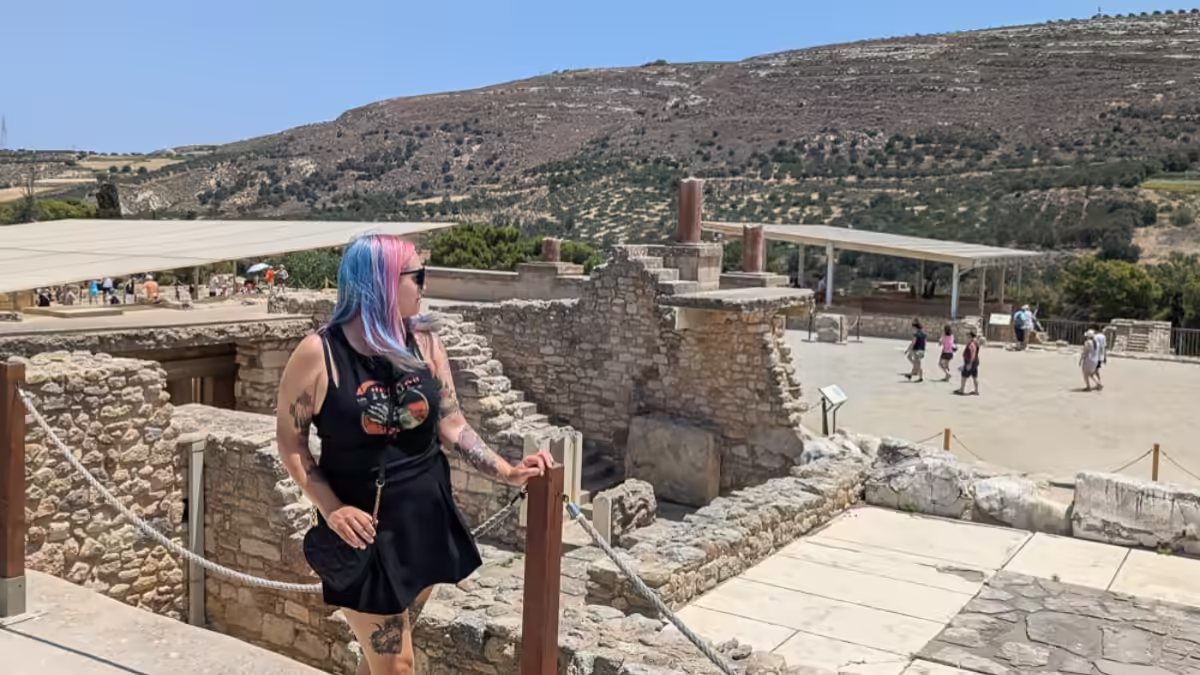
Most people need about 1.5 to 2 hours to visit the Palace of Knossos at a comfortable pace, seeing the Throne Room, Central Court, Grand Staircase, and Queen’s Megaron. With a guided or audio tour, allow 2.5 to 3 hours. Add a half-day if you’re pairing it with the Heraklion Archaeological Museum, where the original frescoes are displayed.
“How long do I need?” is one of the first questions people ask when planning a Knossos visit, and the honest answer depends on how much context you want. The palace itself is compact and you can walk it quickly, but the reconstructed ruins carry limited signage, so the difference between a rushed loop and a rewarding visit is mostly about whether you have a guide or audio to explain what you’re looking at.
This guide breaks down the realistic timings — self-guided, with a guide, and combined with the museum — so you can slot Knossos into your day.
How Long to Spend at a Glance
| Visit style | Time to allow | What fits |
|---|---|---|
| Quick self-guided loop | 1 – 1.5 hours | Main highlights, brisk pace |
| Comfortable self-guided | 1.5 – 2 hours | All key areas, unhurried |
| With guide or audio tour | 2.5 – 3 hours | Full context, stories, Q&A |
| Knossos + Heraklion museum | Half to full day | Ruins plus original frescoes |
The Typical Visit: 1.5 to 2 Hours
Allow 1.5 to 2 hours for a comfortable self-guided visit. That’s enough to walk the Central Court, see the Throne Room and its griffin frescoes, climb the Grand Staircase area, view the Queen’s Megaron with its dolphin fresco, and take in the North Entrance charging-bull relief and the giant storage jars — without rushing or standing too long in the sun.
For most independent visitors, 1.5 to 2 hours is the sweet spot. The palace covers a manageable area, and in that window you can cover every major highlight at a relaxed pace: the ceremonial Central Court at the heart of the palace, the Throne Room with the oldest throne in Europe, the residential quarter around the Grand Staircase, and the Queen’s Megaron with its famous dolphin fresco.
If you’re moving quickly and just want the headline sights, you can do a brisk loop in around an hour. But that leaves little room to pause, read what signage there is, or wait out a crowd at a popular viewpoint. Because the site is open-air with almost no shade, most people find the two-hour mark is where heat and footpath fatigue start to set in during summer, which is another reason to arrive at the 8:00 AM opening.
With a Guide or Audio Tour: 2.5 to 3 Hours
With a licensed guide or a good audio tour, allow 2.5 to 3 hours. The extra time buys context the site’s limited signage doesn’t provide — the story of Arthur Evans’s controversial reconstruction, the myth of the Minotaur and the Labyrinth, and how the Minoans built advanced drainage and light-wells 4,000 years ago. Guided groups also move more deliberately, pausing at each highlight.
Adding a guide changes the visit from a walk among old walls into a story, and that naturally takes longer. A guided walking tour typically runs around 1.5 hours of guided time, after which many people linger to revisit favorite spots, bringing the total on site closer to 2.5 or 3 hours. The payoff is understanding what you’re seeing — why the columns taper downward, which frescoes are replicas, and how the palace connects to the legend of King Minos.
An audio guide gives you similar depth at your own pace, and is a good middle ground if you’d rather not follow a group. Either way, budget more time than a bare self-guided loop. If your schedule is tight, a guide actually makes the time you do have far more rewarding, since you won’t waste any of it wondering what a given ruin was for.
Combining Knossos With the Heraklion Museum
The most common pairing is Knossos plus the Heraklion Archaeological Museum, and there’s a strong reason for it: the vivid frescoes you see on site are replicas, while the surviving originals are displayed in the museum in the city. Seeing the reconstructions in place and then the real fragments a short bus ride away completes the picture in a way neither does alone.
Plan a half to full day for both. Do Knossos first at opening, spend your 1.5 to 3 hours there depending on your style, then head into Heraklion for lunch and the museum in the afternoon, when the palace would be at its hottest and busiest anyway. Note that the old official combined ticket was discontinued in a recent reform, so you generally buy each separately now; our guide to combined tickets explains the current situation.
Frequently Asked Questions
How long do you need at Knossos?
Most visitors need about 1.5 to 2 hours for a comfortable self-guided visit, covering the Throne Room, Central Court, Grand Staircase, and Queen’s Megaron. With a guide or audio tour, allow 2.5 to 3 hours. A brisk highlights-only loop can be done in around an hour, but two hours is the realistic figure for seeing the palace properly without rushing.
Is 1 hour enough for Knossos?
One hour is enough for a quick loop of the main highlights if you’re short on time, but it’s tight. You’ll see the Central Court, Throne Room, and North Entrance, but with little time to pause, read, or wait out crowds at popular viewpoints. If you can, allow 1.5 to 2 hours for a more relaxed visit, especially in summer heat.
How long is a guided tour of Knossos?
A typical guided walking tour of Knossos runs around 1.5 hours of guided time. Many visitors then linger to revisit highlights on their own, so the total on site is usually closer to 2.5 to 3 hours. The guide’s context is valuable because the reconstructed ruins carry limited signage, so the extra time is well spent.
Should I get a guide or audio tour for Knossos?
A guide or audio tour is strongly recommended because on-site signage is limited and the reconstructions can look like a maze of walls without explanation. A guided walking tour adds live storytelling and Q&A, while an audio guide lets you set your own pace. Either turns a walk among ruins into an understandable story of the Minoan palace.
How long does it take to see Knossos and the Heraklion museum together?
Allow a half to full day for both. Spend 1.5 to 3 hours at Knossos, ideally starting at the 8:00 AM opening, then head into Heraklion for the Archaeological Museum in the afternoon, budgeting another 1.5 to 2 hours there. The pairing works because the site’s frescoes are replicas and the originals are in the museum.
What can I see at Knossos in 2 hours?
In two hours you can comfortably see everything most visitors come for: the Central Court, the Throne Room and its griffin frescoes, the Grand Staircase and residential quarter, the Queen’s Megaron dolphin fresco, the North Entrance charging-bull relief, the theatral area, and the giant storage jars. Two hours also leaves room to pause in what little shade exists and take photos.
Is Knossos a big site to walk?
Knossos is compact rather than sprawling — you can walk its core in an hour if you move quickly. The challenge isn’t distance but terrain and exposure: the paths are uneven, with worn steps and almost no shade, so it feels more tiring than the size suggests, especially in summer. Wear closed comfortable shoes and bring water.
Can I visit Knossos on a short layover or cruise stop?
Yes. Knossos sits about 5 km from Heraklion’s port and center, so a focused 1.5-hour self-guided visit fits comfortably into a cruise stop or short layover, transfer time included. Aim for the earliest possible slot to beat the mid-morning excursion crowds, and see our guide on the best time to visit for the cruise-crowd timing.
