
Minoan Frescoes of Knossos: Originals vs Reproductions
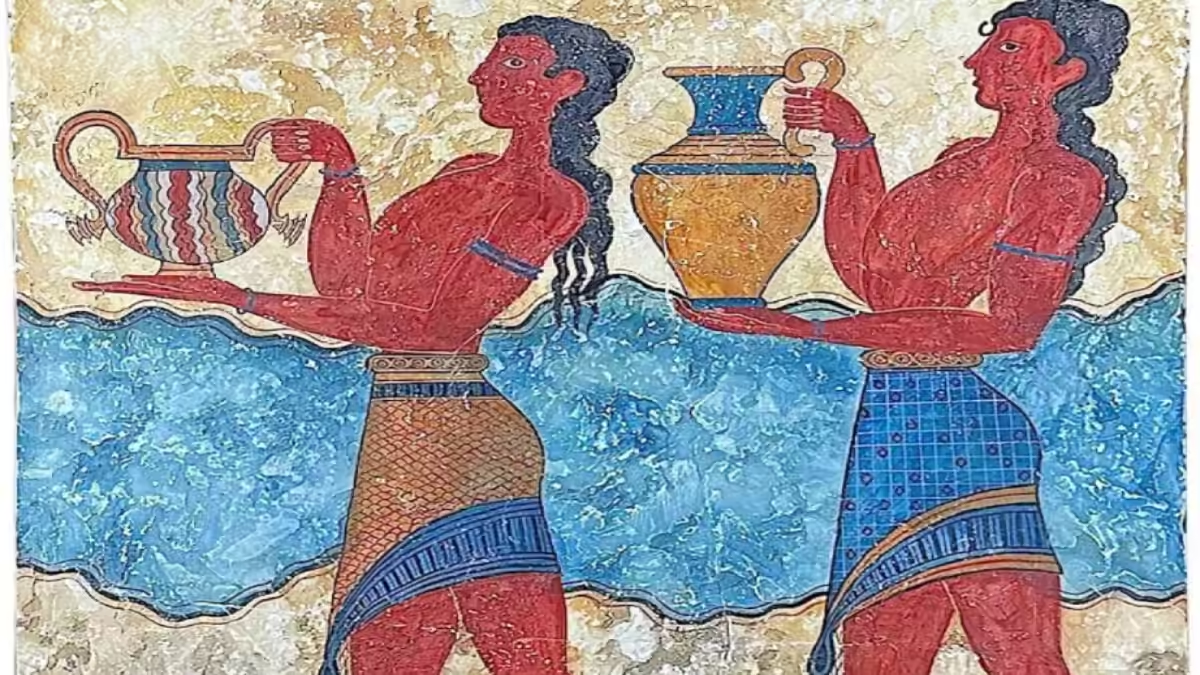
The colorful Minoan frescoes you see across the Palace of Knossos are all reproductions. The surviving originals are displayed a few kilometers away in the Heraklion Archaeological Museum. The famous paintings — the Bull-Leaping (Taureador) scene, the Prince of the Lilies, the Dolphins, the Throne Room griffins and the Ladies in Blue — were heavily restored in the early 1900s by the Gilliéron artists. To see the real thing, pair Knossos with the museum.
The bright wall paintings are what most people picture when they think of Knossos: leaping acrobats, blue dolphins, elegant court ladies. But there is a catch that catches many visitors off guard — not one of the frescoes on the walls of the site is original. Every panel you photograph on location is a copy, and the genuine fragments are in the city museum.
This guide explains which frescoes to look for, why replicas stand on site, the controversial restorations by the Gilliéron father-and-son team, and how to pair Knossos with the Heraklion Archaeological Museum so you see both the settings and the surviving originals.
The Key Frescoes at a Glance
| Fresco | Where it appears on site | Original in the museum |
|---|---|---|
| Bull-Leaping (Taureador) | Associated with the central palace | Yes |
| Prince of the Lilies | South propylaeum / corridor | Yes |
| Dolphins | Queen’s Megaron | Yes |
| Throne Room griffins | Throne Room, west wing | Yes |
| Ladies in Blue | Reconstructed panel | Yes |
Why the Frescoes on Site Are Reproductions
The frescoes at Knossos are reproductions for preservation. The fragile original plaster, painted around 3,500 years ago, would not survive decades exposed to Cretan sun, rain and thousands of visitors. So the genuine fragments were lifted, conserved and moved to the climate-controlled Heraklion Archaeological Museum, and faithful copies were placed on the walls so the site could still show how the rooms once looked.
The reason is straightforward: survival. Fresco is painted plaster, and the surviving Minoan pieces are small, cracked and extremely fragile. Left in place on an open-air site with intense summer heat, winter damp and heavy footfall, they would deteriorate quickly. Removing them to a museum and displaying copies on location is standard conservation practice, and it lets the ruins still communicate their original color and life.
It does mean managing expectations. Visitors sometimes feel let down to learn the vivid panels are copies, but the honest framing is that Knossos gives you the architecture and the sense of place, while the museum holds the authentic art. Understanding this before you go turns a potential disappointment into a plan to see both. It also connects to the wider debate about how much of the site is genuine, covered in our guide to Arthur Evans’s reconstruction.
The Famous Frescoes to Look For
The best-known Minoan frescoes are the Bull-Leaping (Taureador) scene of acrobats vaulting a bull, the Prince of the Lilies relief figure, the Dolphins panel from the Queen’s Megaron, the griffins flanking the Throne Room, and the Ladies in Blue court women. Reproductions of these stand on the Knossos site in or near their original locations, while the surviving originals are grouped together in the Heraklion museum.
A handful of frescoes define Knossos. The Bull-Leaping or Taureador fresco shows slim acrobats grasping and somersaulting over a charging bull — the clearest surviving image of the bull rituals tied to the palace, and to the animal you meet again at the north entrance charging-bull relief. The Prince of the Lilies, a striding figure crowned with lilies and feathers, is one of the most reproduced Minoan images, though even its assembly from separate fragments is debated.
Others are tied to specific rooms. The Dolphins fresco, all blue-and-cream sea life, decorates the Queen’s Megaron in the residential quarter, while the griffins guard the gypsum seat in the Throne Room. The Ladies in Blue and other “court” scenes show elegantly dressed Minoan women and hint at a society where women were prominent in public and ritual life. Seeing them in place helps you read the rooms rather than viewing them as isolated art.
The Gilliéron Restorations
The frescoes owe their familiar appearance to two artists as much as to the Minoans. Émile Gilliéron and his son, working with Sir Arthur Evans in the early 1900s, reconstructed the paintings from the surviving fragments — and in many cases the fragments were tiny, so a great deal of each finished panel is modern painting filling the gaps.
This is where the frescoes become genuinely controversial. Critics argue the Gilliérons imposed an early-twentieth-century, almost Art Nouveau sensibility on the reconstructions, effectively inventing large parts of scenes such as the Prince of the Lilies and the Ladies in Blue. Defenders counter that the restorations are educated interpretations that make the fragments legible to non-specialists. Either way, when you look at a Knossos fresco you are seeing a Minoan-Gilliéron collaboration, and it is worth knowing how much is reconstruction. This blends into the broader question of whether the whole site is over-restored, which our guide on whether Knossos is worth visiting tackles head on.
Pairing Knossos with the Heraklion Museum
To see the real frescoes, you go to the Heraklion Archaeological Museum, about 5 km away in the city center. Its dedicated galleries display the surviving original fragments of the Bull-Leaping scene, the Prince of the Lilies, the Dolphins and the rest, mounted so you can see clearly which portions are ancient and which were filled in. The contrast with the on-site copies is the whole point: ruins and setting at Knossos, authentic art in the museum.
The catch is ticketing. The old official combined Knossos-and-museum ticket was discontinued in a recent reform, so in most cases you now buy each separately, though some tour operators still bundle them — our guide to combined tickets explains the current situation. A logical plan is Knossos first thing in the morning when it is cool, then the museum later in the day. If you want the frescoes explained as you walk the palace, a guided walking tour is the most efficient way to connect what is on the wall with what survives in the city.
Frequently Asked Questions
Are the frescoes at Knossos real?
No. Every fresco displayed on the Knossos site is a reproduction. The genuine originals — fragile painted plaster around 3,500 years old — are conserved in the Heraklion Archaeological Museum a few kilometers away. Copies were placed on the walls so the ruins could still show their original color and layout while protecting the real pieces from sun, rain and crowds. To see the authentic art, visit the museum.
Why are the original frescoes in a museum?
For preservation. Minoan fresco is delicate painted plaster that would not survive prolonged exposure on an open-air archaeological site. Moving the surviving fragments to the climate-controlled Heraklion museum protects them, while faithful reproductions on site keep the rooms legible. This is normal conservation practice at fragile ancient sites, and it means a complete visit really involves two stops: the palace and the museum.
What are the most famous Knossos frescoes?
The best known are the Bull-Leaping (Taureador) fresco of acrobats vaulting a bull, the Prince of the Lilies figure, the Dolphins panel in the Queen’s Megaron, the griffins in the Throne Room, and the Ladies in Blue. Reproductions of these appear on the Knossos site, generally in or near their original spots, while the surviving originals are grouped in the Heraklion Archaeological Museum.
Who restored the Knossos frescoes?
The Swiss artists Émile Gilliéron and his son, working with Sir Arthur Evans in the early 1900s, reconstructed the frescoes from surviving fragments. Because many fragments were very small, a large share of each finished panel is modern painting. Their work is admired for making the images accessible but criticized for imposing an early-twentieth-century style and, in places, effectively inventing parts of scenes.
Why are the Gilliéron restorations controversial?
Because they blur what is ancient and what is modern. In panels like the Prince of the Lilies and the Ladies in Blue, only fragments were genuine, and the Gilliérons filled the gaps with interpretation shaped by the taste of their era. Critics say this misleads visitors about Minoan art; defenders say it makes the fragments understandable. Knowing how much is reconstruction helps you view them critically.
Where can I see the original frescoes?
In the Heraklion Archaeological Museum, in the center of Heraklion about 5 km from Knossos. Its galleries display the surviving original fragments of the major frescoes, mounted so you can tell ancient plaster from modern infill. Pairing the two sites is the standard recommendation: you get the architecture and setting at Knossos and the authentic paintings in the museum.
Can I buy a combined ticket for Knossos and the museum?
The old official combined ticket was discontinued in a recent reform, so in most cases you now buy separate tickets for Knossos and the museum. Some tour operators still bundle the two into a single package. Our guide to combined Knossos and museum tickets sets out the current options and how to organize seeing both in one day.
Should I see Knossos or the museum first?
Either works, but many visitors do Knossos first thing in the morning, when the open-air site is coolest and quietest, then the air-conditioned museum later. Seeing the reproductions in place first can make the original fragments in the museum more meaningful, because you already know where each fresco belonged. If a guided walking tour includes both, it will sequence them for you.
Are the frescoes worth seeing if they are copies?
Yes. On site, the reproductions restore color and meaning to otherwise bare walls and show exactly where each scene belonged, which the museum cannot do. The museum then rewards you with the real, ancient fragments. Treating the two as a pair rather than expecting originals at Knossos is the key to not being disappointed, and it makes for one of Crete’s richest cultural half-days.
